
There is a growing number of people across London who are arriving at eye clinics clutching a list of conditions they have diagnosed themselves sourced entirely from social media. Short-form videos claiming to reveal signs of cataracts, glaucoma, or macular degeneration have racked up millions of views. And while spreading awareness about eye health is never a bad thing, the gap between watching a video and getting an accurate clinical picture is enormous.
When someone finally sits down with the best eye doctor in London has to offer, what gets found is often very different from what was expected. That disconnect is worth paying attention to.
The Problem With Online Vision Checks
Online vision tests and symptom checkers have their place. They can prompt someone to book an appointment who might otherwise have ignored a problem for months. But they are not diagnostic tools. A short-sightedness test on a screen cannot measure the pressure inside your eye. A photo filter cannot reveal the health of your retina. And no algorithm currently exists that can replace the clinical judgement of a trained ophthalmologist.
The conditions most commonly misidentified through self-diagnosis include dry eye disease (often confused with early cataract), mild keratoconus (dismissed as a changing prescription), and age-related macular changes (mistaken for simple eyestrain). Each of these requires different management, and catching them late carries real consequences.
What a Proper Eye Consultation Actually Involves
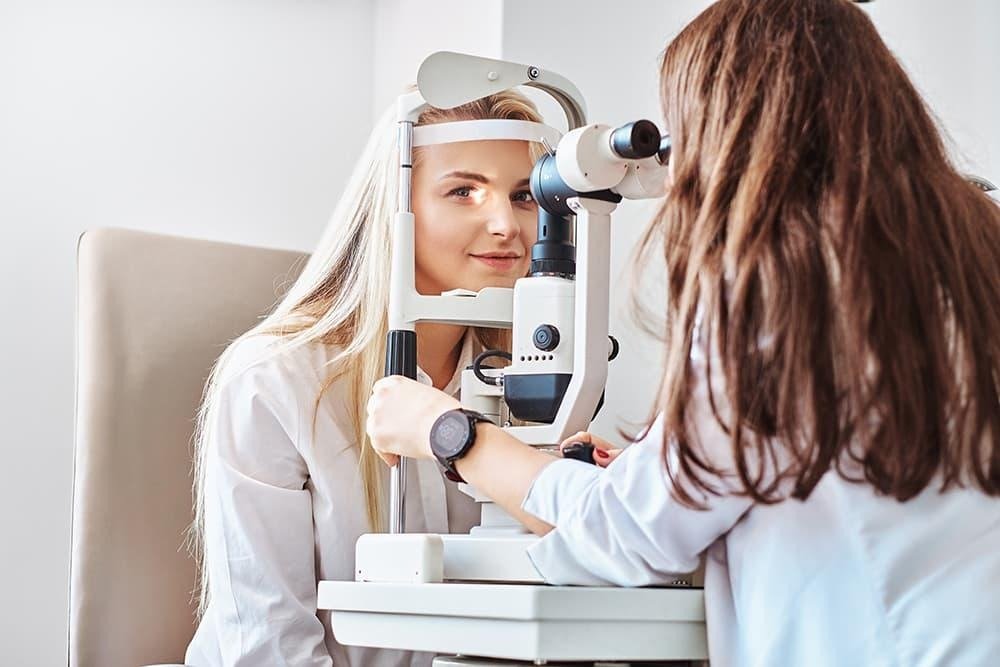
A consultation with the best eye doctor in London can go far beyond reading letters off a chart. A thorough assessment typically includes slit-lamp examination of the cornea, lens, and retina; optical coherence tomography (OCT) imaging to map the layers of the retina in fine detail; corneal topography where relevant; and intraocular pressure measurement.
These tools together paint a picture that no app or internet checklist can replicate. They are also what allows a clinician to spot something serious at a stage when it is still very treatable.
Why Prompt Assessment Saves Vision
Glaucoma, for instance, causes no pain and very little noticeable change to central vision until it is advanced. By the time someone notices something is wrong, significant peripheral vision may already be lost. Early detection through proper examination is the only reliable way to intervene in time.
The same is true for diabetic retinopathy, which is the leading cause of preventable blindness in working-age adults in the UK. A dilated fundus examination by the best eye doctor in London can catch leaking blood vessels before vision deteriorates which is exactly the moment when treatment works.
The Difference Between an Optician and an Ophthalmologist
This is a distinction that often gets lost in general conversation. Opticians are trained to assess and correct refractive errors short-sightedness, long-sightedness, astigmatism. Optometrists can go further, performing eye health assessments and referring onward where needed. Ophthalmologists are medical doctors who have completed specialist surgical and clinical training in eye disease.
For routine prescription checks, a high-street optician is perfectly appropriate. But for anything involving persistent symptoms, a family history of eye disease, or conditions like diabetes or autoimmune illness, the level of assessment that the best eye doctor in London can offer is in a different category entirely.
What Patients Are Actually Finding When They Come In
Clinicians working in private London ophthalmology practices consistently report a pattern: patients who come in having convinced themselves of one diagnosis are often found to have something entirely different or nothing at all. The anxiety generated by online content is real and understandable, but it is not a substitute for clinical evaluation.
There is also the opposite problem. People who feel their symptoms are too minor to mention occasional blurring, mild light sensitivity, a subtle change in colour perception sometimes leave these untreated for years. When they do finally attend, the story is occasionally more serious than the mild symptoms suggested.
One clinic in central London, operating under the Optimal Vision brand, sees a high proportion of patients who have delayed assessment for exactly this reason. The pattern is consistent: people are either over-alarmed by what they read online or too quick to dismiss something that deserved a closer look.
Final Thoughts
The internet has made health information more accessible than at any point in history. That is genuinely useful. But it has also made it easier to mistake information for assessment. The best eye doctor in London can provide not a search result; they are a trained clinician with imaging equipment, clinical history, and the judgement that comes from years of seeing patients.
If something is bothering you about your vision, the most practical thing you can do is book a proper appointment rather than scrolling for answers. The two minutes it takes to get a referral could matter a great deal more than the next video in your feed.
