
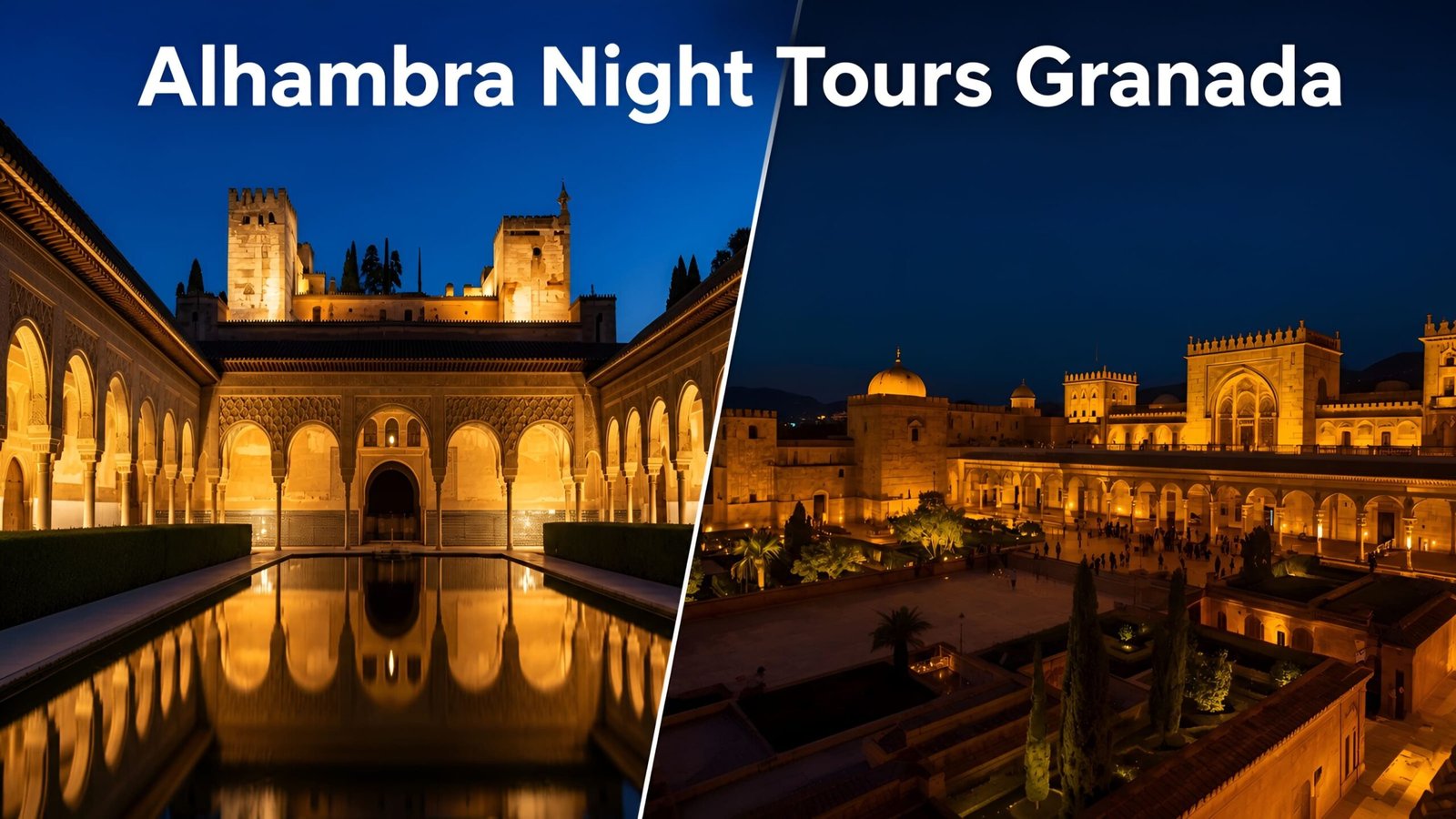
Alhambra Palace Night Tour Attendance Revenue refers to the income generated from visitors who attend evening tours of the historic Alhambra. Night tours are popular because they offer a unique atmosphere, limited visitor capacity, and exclusive access to illuminated palace areas. Revenue depends on ticket prices, seasonal demand, visitor attendance, tourism trends, and special cultural events held throughout the year.
Introduction
Most cultural monuments in Europe operate on a simple logic: more visitors means more revenue. The Alhambra Palace in Granada, Spain, has quietly proved that logic wrong — and the night tour program is the proof.
Alhambra Palace night tour attendance revenue tells a story of deliberate scarcity turning into extraordinary financial efficiency. While daytime tours bring in thousands of visitors each day, the evening program admits only a few hundred — yet those few hundred generate a revenue share that far outpaces their numbers. This analysis unpacks exactly how that system works, what the real attendance figures look like, how revenue is calculated and distributed, and what lessons other heritage sites are drawing from the Alhambra’s model.
Whether you are a tourism researcher, a travel professional, or simply curious about how one of the world’s greatest monuments sustains itself financially, this complete analysis gives you the full picture.
The Alhambra Palace: A Monument Built for Controlled Access
The Alhambra is not a museum or a theme park. It is a living architectural complex — a collection of palaces, fortresses, gardens, and water systems built by the Nasrid dynasty in the 13th and 14th centuries on a rocky promontory above Granada. Its walls contain 800-year-old carved plasterwork, hand-painted tile mosaics, and wooden honeycomb ceilings that cannot be replaced if damaged.
This fragility is the foundation of the Alhambra’s entire visitor management philosophy. The Patronato de la Alhambra y Generalife — the public body that governs the site — has built its operational model around one core principle: every visitor is a potential source of physical stress on irreplaceable materials. Limiting access is not a commercial strategy. It is a conservation imperative.
Night tours represent the most extreme version of this principle. By reducing evening attendance to a fraction of daytime numbers, the Patronato creates both a premium experience and a protective buffer for the monument’s most delicate spaces.
Understanding the Attendance System
Alhambra Palace night tour attendance is governed by a tiered capacity model that adjusts by season but never exceeds its conservation ceiling. Here is how the system is structured:
| Attendance Variable | Details |
|---|---|
| Total Annual Alhambra Visitors | ~2.72 million |
| Night Tour Annual Visitors | 120,000 – 150,000 |
| Night Tours as % of Total Visitors | 5–6% |
| Peak Night Capacity (June–Aug) | 400–500 visitors/night |
| Off-Season Night Capacity (Nov–Mar) | 200–300 visitors/night |
| Max Group Size Per Session | 30 visitors |
| International Visitor Share | ~73% |
| Average Advance Booking (Peak) | 28 days |
The most telling figure in this table is the advance booking average during peak season. When visitors are securing slots nearly a month before their travel date, it signals that night tours are not an afterthought — they are the centerpiece of a Granada trip for a significant portion of international travelers.
Capacity is reviewed periodically by the Patronato but changes are rare and conservative. The governing body has consistently resisted pressure from tour operators and local businesses to expand night tour availability, viewing controlled scarcity as both a conservation tool and a revenue multiplier.
Night Tour Schedule: When Access Is Granted
Access to Alhambra Palace night tours follows a rigid seasonal calendar:
- April 1 to October 14 (High Season): Tuesday through Saturday evenings
- October 15 to March 31 (Low Season): Friday and Saturday evenings only
- No night tours on Sundays or Mondays throughout the year
- Some public holidays may alter the schedule — official confirmation required
This schedule serves multiple purposes simultaneously. It gives conservation staff and maintenance crews dedicated days to repair, clean, and inspect the palace without visitor interference. It also creates a natural booking urgency — visitors who miss a Tuesday slot know the next available evening might be Thursday or Friday, encouraging faster commitment.
Revenue Analysis: What the Numbers Actually Mean
The financial performance of Alhambra Palace night tour attendance revenue is best understood through ratios rather than raw figures. The absolute numbers are impressive — but the ratios reveal the true efficiency of the model.
The Core Revenue Paradox
Night tours bring in approximately 5 to 6 percent of the Alhambra’s total annual visitors. Yet they account for 20 to 22 percent of total ticket revenue. That four-to-one revenue-to-visitor ratio is the engine of the entire night tour financial model.
| Revenue Metric | Night Tours | Daytime (Implied) |
|---|---|---|
| Share of Annual Visitors | 5–6% | 94–95% |
| Share of Annual Revenue | 20–22% | 78–80% |
| Revenue Per Visitor Index | 4x average | Baseline |
| Annual Gross Revenue | €8.4M–€12M | Majority of total |
| Annual Operating Costs | ~€985,000 | Higher per visitor |
The operating cost advantage is significant. Running night tours requires a dedicated lighting system, evening security staff, and a separate ticketing operation — but it does not require the full daytime infrastructure of crowd management teams, multi-zone staffing, and high-volume facility support. The result is a program with exceptional profit margins.
Monthly Revenue Distribution
Revenue is not distributed evenly across the year. The seasonal pattern is predictable but sharp:
| Period | Est. Monthly Revenue | Attendance Level |
|---|---|---|
| July (Peak) | ~€900,000 | Maximum capacity nightly |
| August (Peak) | ~€850,000 | Near maximum capacity |
| June / September | ~€600,000–€700,000 | High but not capped |
| April / October | ~€450,000–€550,000 | Moderate demand |
| January (Low) | ~€385,000 | Minimum, Fri–Sat only |
| February / March | ~€400,000–€450,000 | Gradually increasing |
Pricing Architecture: Building Revenue Through Exclusivity
The pricing structure for Alhambra Palace night tours is designed to reflect the premium nature of the experience while remaining accessible to a broad international audience. As of 2025, the structure is:
- Standard Night Visit — Nasrid Palaces: from €12 per person
- Generalife Garden Night Visit: separately priced
- Professional Guided Night Tour (add-on): €15–€20 per person
- Audio Guide Device: approximately €6 per rental
- Private Group Night Tour: premium rate, typically 3x to 5x standard pricing
These prices are reviewed and adjusted periodically by the Patronato. The 2025 pricing reflects a deliberate upward adjustment that increased revenue without reducing attendance — confirming strong international demand at higher price points.
The private tour market deserves attention. While numbers are small, private groups paying premium rates contribute disproportionately to per-night revenue on evenings where standard demand is lower. Off-season Friday nights may see a private group booking at 4x standard rates, partially compensating for the seasonal attendance drop.
Who Attends and Why It Matters
The demographic profile of Alhambra night tour visitors is markedly different from daytime visitors — and that difference has major implications for both revenue and local economic impact.
| Visitor Profile Factor | Night Tour Visitors | Daytime Visitors |
|---|---|---|
| International Share | ~73% | ~55–60% |
| Avg Trip Length in Granada | 2–3 nights | Often day trip |
| Primary Booking Method | Online, weeks in advance | Mix of advance and on-site |
| Post-Tour Restaurant Spend | Very high (post-10PM) | Moderate |
| Primary Motivation | Exclusive, once-in-a-lifetime | General sightseeing |
The 73 percent international visitor share among night tour attendees creates a compounding economic effect. These travelers tend to book higher-category hotels, spend more on dining, and extend their stay by at least one additional night compared to day-trip visitors. This single behavioral pattern generates a ripple of additional spending that extends well beyond the Alhambra’s own ticket revenue.
Economic Impact on Granada
The Alhambra is the economic spine of Granada’s tourism industry. Total annual contribution to the city’s economy is estimated at approximately €490 million — and night tours punch well above their weight in driving that figure.
Restaurants in the Realejo and Albaicin neighborhoods have restructured their evening service specifically around night tour end times. A visitor emerging from the Alhambra at 10:15 PM in July is hungry, emotionally elevated, and ready to spend generously. Local dining revenue in the surrounding area rises approximately 20 percent in the hours immediately following night tour completion.
Approximately 1.7 million Alhambra visitors per year book accommodation in Granada. Flamenco venues, tapas bars, artisan shops, and transport services have all aligned operations to capture the night tour visitor flow.
Conservation Reinvestment: The Revenue Cycle
Approximately 30 percent of net revenue from Alhambra Palace night tours is channeled directly into preservation and restoration work. This creates a self-sustaining financial cycle: premium tickets fund the conservation work that maintains the premium quality of the experience that justifies the premium tickets.
The 2023 restoration of the Hall of the Two Sisters — featuring one of the finest honeycomb muqarnas ceilings in existence — was funded in part by premium ticket revenue. Night tour visitors who walk beneath that ceiling are, in a literal sense, paying for its survival.
Beyond direct funding, the low-attendance model of night tours reduces physical conservation demands. Fewer footsteps mean less vibration-related stress on ancient foundations. Smaller crowds mean less humidity damage from human breath. The conservation benefit of limiting night attendance cannot be expressed purely in euros — but it is as real as any budget line item.
Booking the Night Tour: Practical Guide
Official Booking
All official night tour tickets are available through the Patronato de la Alhambra y Generalife’s website at alhambra-patronato.es. This is the only guaranteed source of authentic tickets at face-value prices.
Recommended Booking Timeline
- June, July, August: Book 4 to 6 weeks ahead — tickets sell out routinely
- April, May, September, October: 2 to 3 weeks in advance is generally sufficient
- November through March: 1 week ahead is usually adequate but check limited schedule
What to Bring
- Official booking confirmation (digital or printed)
- Identification matching the booking name
- Comfortable footwear for uneven historic surfaces
- A light layer for cooler evening temperatures
Frequently Asked Questions
Q: What makes Alhambra Palace night tour attendance revenue so high relative to visitor numbers?
The answer lies in the revenue-per-visitor ratio. Night tour visitors pay premium ticket prices, often add guided tour and audio guide fees, and represent the highest-spending demographic. The controlled capacity model keeps operating costs low while ticket prices remain high — creating exceptional margins.
Q: Are Alhambra night tour tickets available on the day of the visit?
Rarely, and not reliably. During peak season, slots sell out weeks in advance. Even in off-season months, same-day availability is not guaranteed. The official recommendation is to book as early as possible through the Patronato website.
Q: Does Alhambra night tour revenue increase every year?
Revenue trends have been consistently upward over the past decade, driven by price increases rather than attendance growth. The Patronato has raised ticket prices while keeping capacity fixed, confirming strong demand at higher price points among international visitors.
Q: How does the night tour experience differ from the daytime visit?
Night tours cover a more limited section — primarily the Nasrid Palaces — but the experience is fundamentally different. Smaller crowds, purpose-designed lighting, cooler temperatures, and the evening silence create an intimacy impossible during daytime peak hours.
Q: Is the Generalife garden included in the night tour?
The Generalife garden is included in some night tour packages and seasons but not all. Check the specific ticket type and seasonal schedule when booking. The Alcazaba fortress is not included in any standard night tour.
Conclusion
The Alhambra Palace night tour attendance revenue model is a lesson in what happens when a cultural institution prioritizes quality over quantity and conservation over capacity. By admitting fewer visitors, charging premium prices, and reinvesting revenue into preservation, the Patronato has created a program that is simultaneously financially exceptional and environmentally responsible.
For the Alhambra, the night tour is not a marketing gimmick or a revenue afterthought. It is a deliberate architectural decision applied to visitor management: restrict access to protect the asset, and the asset becomes more valuable over time. That principle has produced one of the highest revenue-per-visitor ratios in European heritage tourism — and it shows no sign of declining.
If you are planning a visit to Granada, securing a night tour ticket before you book anything else is the single most important logistical step you can take. The rest of the city will accommodate you. The Alhambra at night will not wait.
Popular post
