
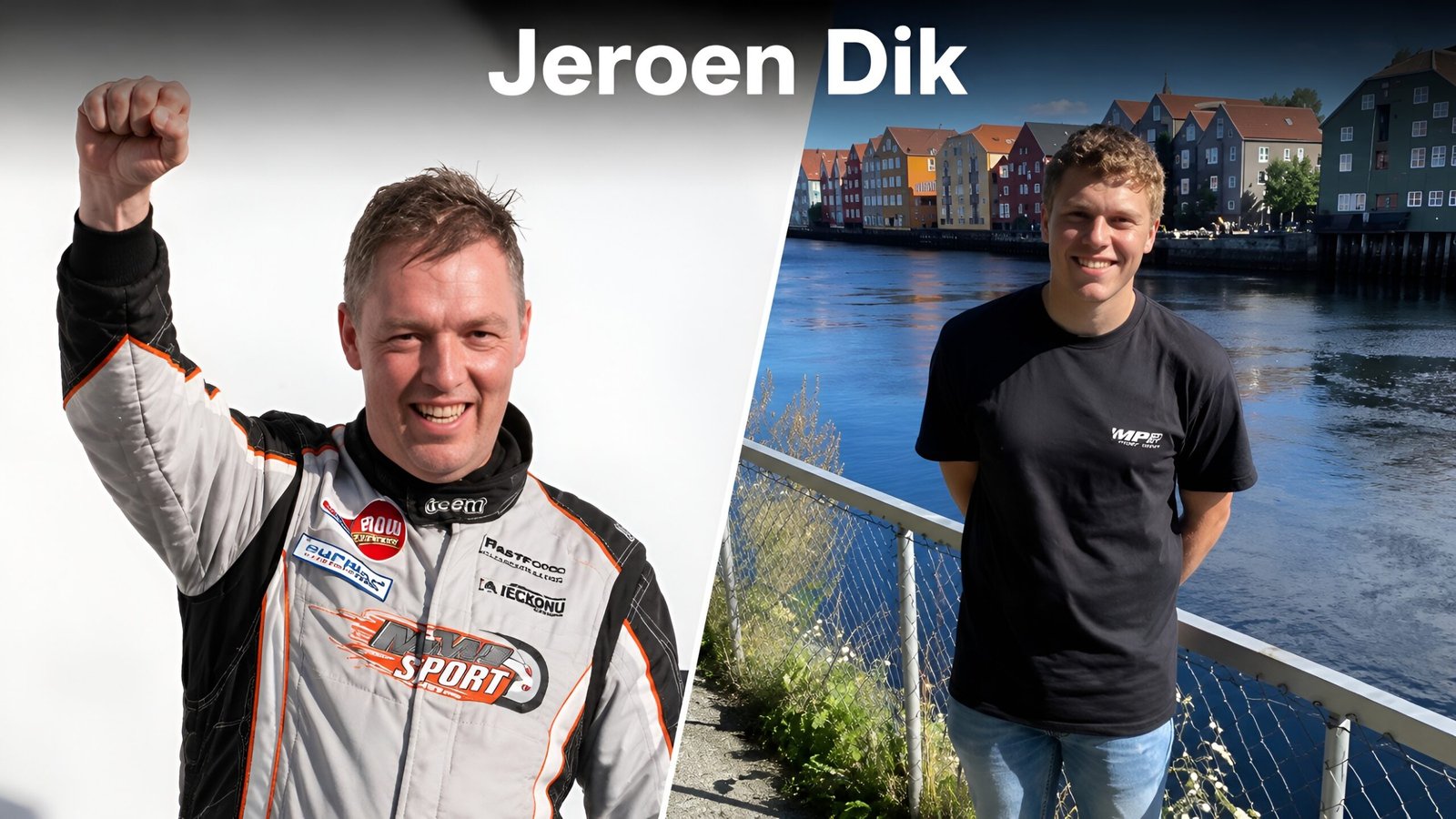
Jeroen Dik is a Dutch materials scientist and Professor of Materials in Art and Archaeology at Delft University of Technology (TU Delft). He is globally recognized for developing non-invasive imaging technologies, including MA-XRF scanning, that reveal hidden layers in masterworks by Van Gogh, Rembrandt, and Vermeer — without causing any damage to the original artwork.
Quick Bio Table
| Detail | Information |
| Full Name | Jeroen Dik |
| Nationality | Dutch (Netherlands) |
| Profession | Materials Scientist, Professor, Art Conservation Researcher |
| University | Delft University of Technology (TU Delft) |
| Position | Antoni van Leeuwenhoek Professor of Materials in Art and Archaeology |
| Key Technique | MA-XRF (Macro X-ray Fluorescence) Scanning |
| Notable Works Studied | Van Gogh’s Patch of Grass, Vermeer’s Girl with a Pearl Earring |
| Media Coverage | BBC News, National Geographic, The Guardian |
| Field | Cultural Heritage Science / Technical Art History |
| Academic Background | Chemistry, Materials Science |
Who is Jeroen Dik?
Jeroen Dik is one of the most remarkable scientists working at the intersection of art and technology today. Born and educated in the Netherlands, he has built an extraordinary career that defies traditional academic boundaries. Rather than choosing between science and art, he chose both — and in doing so, created an entirely new way of understanding the world’s most treasured paintings. His ability to look beneath the surface of a canvas and read its chemical story has changed how museums, historians, and conservators approach cultural heritage.
His academic foundation lies firmly in chemistry and materials science, disciplines that gave him the analytical tools to interrogate artworks at the molecular level. What separates Dik from most scientists is his deep respect and understanding of art history, which allows him to interpret scientific findings with genuine cultural sensitivity. He does not merely detect chemicals in paint; he translates those chemical signals into historical narratives. That rare combination of scientific precision and humanistic understanding has made him a globally influential figure.
How Jeroen Dik Built His Career at TU Delft
Delft University of Technology, one of Europe’s most prestigious institutions for engineering and applied sciences, became the home and launchpad of Dik’s professional life. At TU Delft, he holds the distinguished title of Antoni van Leeuwenhoek Professor of Materials in Art and Archaeology — a position that reflects both the university’s recognition of his extraordinary contributions and the interdisciplinary nature of his work. The role allows him to lead cutting-edge research while also shaping the next generation of scientists.
His department at TU Delft is focused specifically on developing non-invasive and minimally invasive techniques to examine and preserve cultural heritage. This work requires collaboration across multiple disciplines — physics, chemistry, art history, and conservation science — and Dik thrives in this environment. The university’s world-class laboratories provide him with the infrastructure to run experiments that would be impossible elsewhere, and its network of institutional partnerships amplifies the real-world impact of every discovery his team makes.
The Revolutionary Science Behind MA-XRF Scanning
The technique most closely associated with Jeroen Dik’s name is Macro X-ray Fluorescence scanning, commonly known as MA-XRF. This method works by directing a focused beam of X-rays across the surface of a painting. When the X-rays interact with the atoms of pigment in the paint, each chemical element emits its own specific fluorescent signal. By mapping these signals across the entire canvas, researchers can create detailed elemental maps showing exactly where specific pigments are located — including in layers buried beneath the surface.
What makes MA-XRF so groundbreaking is that it reveals information that is completely invisible to the naked eye, to ultraviolet light, and even to standard infrared imaging. It can penetrate through multiple layers of paint to detect compositions underneath, effectively allowing scientists to “see through” a painting’s visible surface. Before this technology became widely used, studying hidden layers often required physically removing tiny paint samples — a procedure that risked permanently damaging irreplaceable artworks. MA-XRF eliminates that risk entirely, and Dik’s work has been central to making the technique accessible to museums worldwide.
Uncovering the Hidden Portrait Beneath Van Gogh’s Patch of Grass
One of the most celebrated discoveries in modern art history came when Jeroen Dik turned his scientific tools on Vincent van Gogh’s 1887 painting Patch of Grass, which hangs in the Kröller-Müller Museum in the Netherlands. Using synchrotron-radiation-based X-ray fluorescence in collaboration with Professor Koen Janssens from the University of Antwerp, Dik’s team revealed a detailed portrait of a peasant woman hidden beneath the painting’s surface — a face that had been invisible for over a century.
The discovery was far more than a technical achievement. It shed new light on Van Gogh’s working conditions and economic circumstances during his early career. Art historians estimate that Van Gogh reused approximately one third of his existing canvases, painting over earlier works because he simply could not afford to buy new materials. The hidden peasant woman beneath Patch of Grass was consistent with the dark, realistic figures he was painting in his Nuenen period — before his famous transition to the bright, expressive colours for which he is now universally known. Dik’s find transformed our understanding of Van Gogh’s artistic evolution and practical realities.
The Girl in the Spotlight: Examining Vermeer’s Masterpiece
In 2018, Jeroen Dik was a key contributor to one of the most ambitious art conservation projects in recent history: the comprehensive scientific examination of Johannes Vermeer’s Girl with a Pearl Earring, housed at the Mauritshuis museum in The Hague. Known as the “Girl in the Spotlight” project, the investigation brought together scientists, conservators, and art historians in a coordinated effort to give the painting the equivalent of a full medical body scan.
The team deployed multiple advanced imaging technologies simultaneously, including optical coherence tomography — a tool originally developed for use in eye medicine — alongside XRF scanning and hyperspectral imaging. The findings were extraordinary. They discovered that the background of the painting, which appears as a simple, flat dark tone, was originally a rich green curtain that had faded and degraded over centuries of exposure to light. Even more remarkably, the examination revealed that the famous “Girl” actually possesses eyelashes — fine details that were long thought to be absent but had simply become too faint for conventional examination to detect. These revelations fundamentally changed how art lovers and scholars understand one of the most iconic images in Western art.
Rembrandt Reexamined Through the Lens of Science
Jeroen Dik’s contributions to Rembrandt scholarship have been equally significant. Among his most intriguing findings is work relating to Rembrandt’s Saul and David, a large-format painting from around 1660. Analysis using XRF techniques revealed that the painting had at some point been physically cut in two separate halves, possibly to make individual works that might sell for higher prices when offered separately. The two halves were eventually reunited, but Dik’s research showed that they had likely shifted slightly from their original positions relative to each other.
Such discoveries illustrate the broader value of scientific analysis in art history. Questions that curators and historians had debated for decades based on stylistic and documentary evidence could suddenly be addressed with objective, measurable data. Whether a canvas had been trimmed, whether pigments were consistent with a claimed date of creation, whether a signature showed the same chemical composition as the surrounding paint — all of these questions now had the potential for definitive, evidence-based answers. Dik’s work transformed these once-speculative debates into rigorous investigations.
Fighting Art Forgery With Chemical Fingerprints
One of the most practically valuable applications of the imaging science pioneered by researchers like Jeroen Dik is in the detection of art forgeries. Every pigment used by painters throughout history has a specific chemical composition that can be dated with considerable accuracy. Titanium white, for instance, was not manufactured for artistic use until the twentieth century. If MA-XRF scanning detects titanium white in a painting that is supposed to date from the seventeenth century, it is immediately clear that the work is either a forgery or has been substantially repainted.
This kind of forensic capability has become indispensable to major auction houses, insurance companies, and museum acquisition departments. The case of a painting attributed to the Dutch Golden Age master Frans Hals illustrates the point precisely. A canvas titled Portrait of a Gentleman was sold by Sotheby’s for nearly ten million euros in 2011, having been examined by numerous art experts who attributed it to Hals based on brushwork, composition, and apparent pigments. Subsequent XRF research ultimately revealed inconsistencies that proved the attribution was incorrect. Every major museum now operates its own XRF scanner, and the methodology that Dik helped develop and champion is at the heart of this global transformation in authentication practice.
Collaborations With the World’s Greatest Museums
The impact of Jeroen Dik’s work extends far beyond TU Delft’s laboratories. He maintains active research partnerships with some of the most important cultural institutions in the world. In the Netherlands, he works closely with the Rijksmuseum, the Van Gogh Museum, and the Mauritshuis. Internationally, his collaborations have reached the Louvre in Paris and the Metropolitan Museum of Art in New York, among others. Each partnership ensures that his scientific findings are applied directly to the decisions that conservators and curators make every day.
These institutional relationships are not merely prestigious affiliations — they are genuinely productive scientific collaborations in which museum collections serve as research material and museum expertise informs scientific questions. Dik and his colleagues work alongside conservators who can translate imaging data into practical restoration strategies, ensuring that every scientific discovery has a tangible benefit for the physical preservation of the artworks involved. This model of embedded, collaborative research has become a blueprint for how materials science and cultural heritage can work together effectively.
Non-Invasive Methods Changing the Future of Conservation
Before the widespread adoption of the non-destructive imaging techniques that Dik champions, studying the internal structure of a painting often required physically removing tiny paint samples and subjecting them to laboratory analysis. While these micro-sampling methods were carefully controlled and caused minimal visible damage, they were still invasive procedures that permanently altered irreplaceable objects. Dik has been at the forefront of a movement to make such sampling unnecessary by developing imaging techniques that yield equivalent — or superior — information without any physical intervention.
Beyond MA-XRF, his research programme incorporates infrared reflectography, which reveals underdrawings and preliminary sketches made by artists before applying paint; X-radiography, which shows compositional changes and structural features; and three-dimensional scanning methods that map brushstroke textures and surface topography at microscopic scales. Together, these techniques create what might be described as a complete scientific biography of a painting — a comprehensive record of its creation, its history, and its current physical state that can guide conservators, inform historians, and help museums present artworks more effectively to the public.
Teaching the Next Generation of Art Scientists
Alongside his research, Jeroen Dik is deeply committed to education and mentorship. At TU Delft, he teaches courses that bring together students from backgrounds in chemistry, materials engineering, and art history, challenging them to think across disciplinary boundaries and develop the kind of interdisciplinary fluency that his own career exemplifies. He believes strongly that the next major breakthroughs in cultural heritage science will come from researchers who are equally at home in a laboratory and in a gallery.
His approach to teaching reflects his broader intellectual philosophy: that removing the artificial barriers between disciplines is the key to answering questions that no single field can address alone. Students in his courses learn not only the technical skills required to operate imaging equipment and interpret analytical data, but also the art historical context necessary to understand why those data matter. Dik actively mentors young researchers and has helped create a pipeline of interdisciplinary scientists who are now contributing to cultural heritage institutions around the world.
Media Recognition and Public Engagement
The scientific work of Jeroen Dik has attracted substantial media attention, bringing art conservation science to audiences far beyond academic circles. His discoveries have been featured by BBC News, National Geographic, and The Guardian, among many other major publications and broadcasters. This media profile reflects not only the genuine drama of uncovering hidden masterworks but also Dik’s talent for communicating complex scientific ideas in language that non-specialists can understand and appreciate.
He approaches public engagement as an integral part of his professional responsibility, not as an optional extra. By making the science of art conservation accessible and exciting to general audiences, he has helped build broader public support for the funding of cultural heritage research and for the mission of museums as scientific institutions as well as cultural ones. His ability to convey the wonder of seeing through centuries of paint to discover a hidden face is a genuinely rare gift, and it has made him one of the most effective ambassadors that materials science has ever had.
The Broader Legacy of Cultural Heritage Science
The work that Jeroen Dik has done, and continues to do, has implications that stretch well beyond any single painting or discovery. He has helped establish the scientific analysis of artworks as a rigorous, respected discipline in its own right — one that sits at the intersection of physics, chemistry, materials engineering, and art history, and that contributes to all of those fields simultaneously. The methodologies he has developed and promoted are now standard practice in major museums worldwide, and their influence continues to grow as imaging technology becomes more powerful and more affordable.
Perhaps most importantly, his career demonstrates that the boundaries between the sciences and the humanities are not fixed or fundamental. The questions that matter most — why did this artist make these choices, how was this object made, what has happened to it over time, is this work authentic — require both kinds of knowledge to answer properly. By building a career that inhabits both worlds with equal confidence and rigour, he has created a model that younger researchers across many fields are now following. His legacy is not just a list of discoveries; it is a way of thinking about knowledge itself.
Conclusion
Jeroen Dik stands as one of the most important figures in contemporary cultural heritage science — a researcher whose work has fundamentally changed how we study, protect, and understand the world’s greatest artworks. Through the development and application of non-invasive imaging techniques, he has revealed hidden paintings, confirmed or challenged attributions, exposed forgeries, and illuminated the working practices of artistic giants like Van Gogh, Rembrandt, and Vermeer. His institutional home at TU Delft has given him the resources and the collaborative environment to pursue research that would have been impossible for any single discipline to achieve alone. His partnerships with leading museums have ensured that his science has direct, practical consequences for the preservation of irreplaceable cultural treasures. And his commitment to education and public engagement has multiplied his impact far beyond what any individual scientist working in isolation could achieve. In a world where art and science are too often treated as opposites, Jeroen Dik is living proof that they are most powerful when they work together.
Frequently Asked Questions (FAQs)
1. Who is Jeroen Dik and what is he known for?
Jeroen Dik is a Dutch professor and materials scientist at TU Delft, best known for using non-invasive imaging technologies like MA-XRF to reveal hidden layers and secret compositions beneath famous paintings by Van Gogh, Rembrandt, and Vermeer.
2. What university does Jeroen Dik work at?
He is the Antoni van Leeuwenhoek Professor of Materials in Art and Archaeology at Delft University of Technology (TU Delft) in the Netherlands.
3. What is MA-XRF and why is it important?
MA-XRF stands for Macro X-ray Fluorescence. It is a scanning technique that maps the chemical elements in paint layers without damaging the artwork. It is important because it allows scientists to see hidden compositions, detect forgeries, and study how a painting was made — all non-destructively.
4. What did Jeroen Dik discover beneath Van Gogh’s Patch of Grass?
Using synchrotron-based XRF scanning, he and his colleagues revealed a detailed portrait of a peasant woman hidden beneath the painting’s surface, showing that Van Gogh regularly reused canvases due to financial hardship.
5. Has Jeroen Dik worked on Vermeer’s Girl with a Pearl Earring?
Yes. As part of the 2018 “Girl in the Spotlight” project, his team discovered that the painting’s background was originally a green curtain, and that the figure actually has eyelashes — details previously undetectable through conventional examination.
6. Can MA-XRF scanning detect art forgeries?
Absolutely. Because every pigment has a specific chemical profile tied to its period of manufacture, MA-XRF can instantly identify anachronistic materials — such as twentieth-century titanium white in a supposedly seventeenth-century painting — exposing forgeries with objective scientific evidence.
7. Which museums has Jeroen Dik collaborated with?
His research partnerships include the Rijksmuseum, the Van Gogh Museum, the Mauritshuis, the Louvre, and the Metropolitan Museum of Art, among many other leading cultural institutions across Europe and beyond.
Fore more info: Magazineinsights.co.uk
