
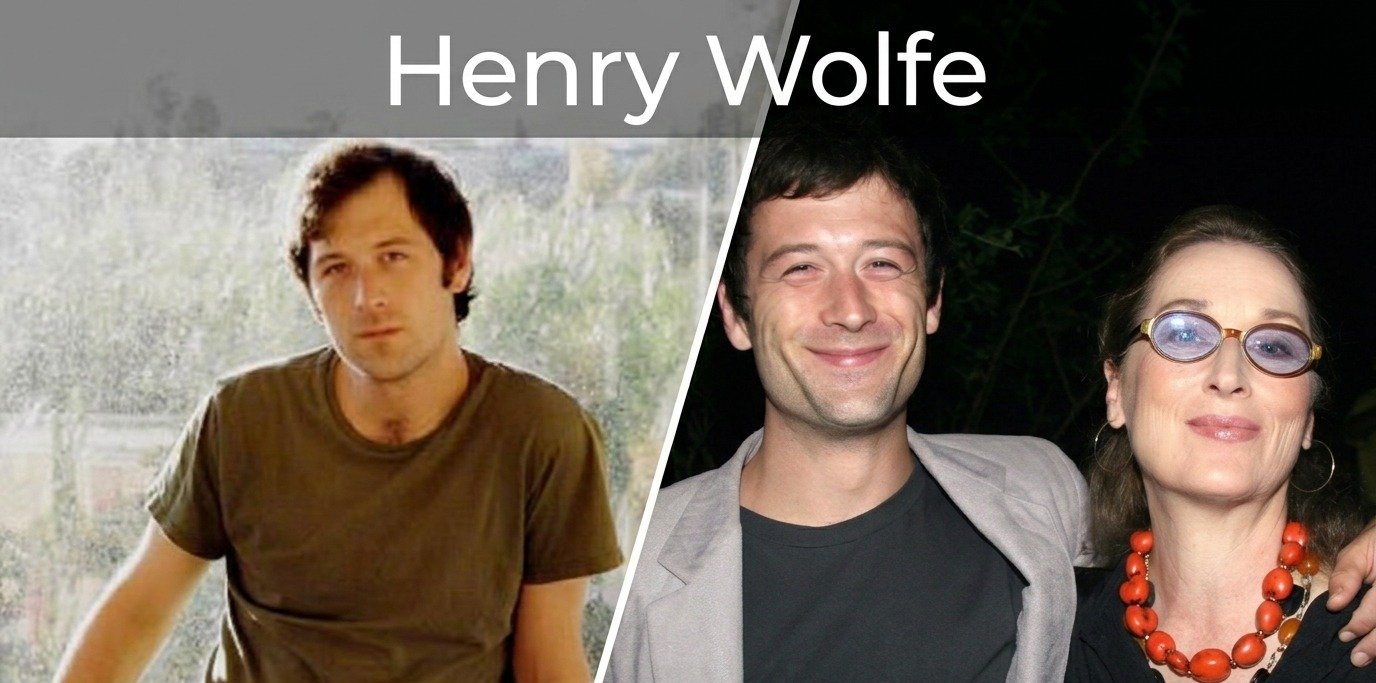
Henry Wolfe, the eldest son of Meryl Streep, established himself as an indie singer-songwriter and musician, proving his talent independently through bands, solo albums, and film soundtrack contributions rather than pursuing an acting career like many celebrity children.
Quick Bio Table Henry Wolfe
| Full Name | Henry Wolfe Gummer |
| Stage Name | Henry Wolfe |
| Date of Birth | November 13, 1979 |
| Place of Birth | New York City, USA |
| Nationality | American |
| Parents | Meryl Streep (mother), Don Gummer (father) |
| Siblings | Mamie Gummer, Grace Gummer, Louisa Jacobson |
| Education | Hotchkiss School; Dartmouth College (Class of 2002) |
| Occupation | Singer-Songwriter, Musician, Actor |
| Genre | Indie Pop, Folk, Alternative, New Romantic |
| Spouse | Tamryn Storm Hawker (married June 2019) |
| Children | One daughter, one son (born May 2022) |
| Record Label | Undermountain Music (independent) |
| Notable Albums | Linda Vista (2011), Asilomar (2015) |
Who Is Henry Wolfe? The Indie Artist Who Stepped Out of Hollywood’s Shadow
Henry Wolfe (born Henry Wolfe Gummer on November 13, 1979) is an American indie singer-songwriter, musician, and occasional actor. He is the eldest child of acclaimed actress Meryl Streep and sculptor Don Gummer. Rather than pursuing a high-profile acting career like several members of his family, Wolfe focused primarily on music, developing an independent career rooted in indie pop and singer-songwriter traditions. After co-founding the New York band Bravo Silva, he launched a solo career that produced projects such as Linda Vista (2011) and Asilomar (2015). Known professionally by his middle name, Wolfe has built a reputation based on his own artistic work rather than his family’s Hollywood legacy.
Early Life and Family Background: Growing Up Gummer
Henry Wolfe Gummer was born into an extraordinary family. His mother, Meryl Streep, is widely regarded as one of the greatest actresses in cinema history — a three-time Academy Award winner and a cultural institution. His father, Don Gummer, is a distinguished sculptor whose large-scale works have been exhibited across the United States and internationally. Growing up alongside three younger sisters — Mamie Gummer (a television actress), Grace Gummer (also an actress), and Louisa Jacobson (a model and actress) — Henry was immersed in artistic conversation from his earliest years. The family maintained homes in both Los Angeles and Connecticut, giving Henry exposure to both the glamour of Hollywood and the quieter rhythms of New England life. It was a childhood steeped in aesthetic sensibility, intellectual curiosity, and creative ambition.
Despite this artistically rich environment, Henry has spoken candidly about the pressures of growing up with a famous mother. Rather than feeling entitled, he felt the weight of expectation and chose to sidestep it entirely. His decision to attend the Hotchkiss School and later Dartmouth College — one of America’s most prestigious Ivy League universities — reflected a commitment to intellectual grounding before artistic expression. At Dartmouth, he studied broadly, laying the foundations of a literary and cultural awareness that would later permeate his songwriting. After graduating in 2002, he relocated to New York City, where the real musical education began — not in classrooms, but in clubs, rehearsal studios, and late-night songwriting sessions with collaborators who would become lifelong creative partners.
From Dartmouth to Downtown NYC: The Bravo Silva Years
Co-Founding an Indie Band and Finding His Voice
After graduating from Dartmouth, Henry briefly enrolled at NYU’s Tisch School of the Arts, one of the country’s premier drama and arts conservatories. However, the pull of music proved stronger than the structure of academia. He left Tisch after two years and co-founded the New York indie pop band Bravo Silva, a decisive step that placed him firmly in the city’s vibrant alternative music scene. In July 2004, Bravo Silva released their debut EP titled ‘July,’ which introduced their sound to a receptive indie audience. The following year, in 2005, the band released their self-titled full-length album, earning positive notices from critics who admired their polished, melodic approach to indie pop. For Henry, Bravo Silva was a crucial proving ground — a space where he learned the discipline of collaborative songwriting and the realities of independent music-making.
The dissolution of Bravo Silva, while professionally disappointing in the short term, proved artistically liberating for Henry. He later described the breakup as giving him ‘the unique opportunity to expand my horizons as a songwriter.’ With the band behind him, he was free to explore a wider palette of sounds, influences, and lyrical approaches. He relocated to Los Angeles, where he immersed himself in a different musical culture — playing jazz and pop standards on piano at a downtown lounge, absorbing the harmonic sophistication of American songbook classics. It was during this period that the seeds of his solo sound began to germinate, drawing on the introspective tradition of 1970s West Coast singer-songwriters and the cosmopolitan sophistication of jazz and pop composition.
Solo Beginnings: EPs and the Road to Linda Vista
Henry’s transition from band member to solo artist was gradual and deliberate. In 2008, he released The Blue House, an EP of original compositions that showcased a more intimate, guitar-driven folk sensibility. The following year, he released Wolfe Sings Field — a collection of covers interpreting songs written by Portland-based songwriter Peter Field. This EP demonstrated both his interpretive range and his willingness to champion other writers’ voices, a sign of artistic generosity uncommon in a landscape of self-promotion. These early solo releases were modest in commercial scope but significant in artistic terms: they established the voice, the aesthetic, and the philosophical approach that would define his career. Working independently through his own Undermountain Music label, Henry was in full control of his creative output — a position of integrity that he has maintained throughout.
Linda Vista (2011): The Album That Announced an Indie Star
Released in 2011, Linda Vista was Henry Wolfe’s first full-length solo album of original material, and it arrived as a fully formed statement of artistic identity. Produced alongside Nico Aglietti and Aaron Older — both members of the acclaimed Los Angeles band Edward Sharpe and the Magnetic Zeroes — the album was recorded over three years on an Ampex 24-track tape machine, using analog technology to achieve a warm, textured sound entirely at odds with contemporary digital production. Henry has described the recording process as intentionally anti-modern: ‘Sonically, the record doesn’t have a lot in common with contemporary music you’d hear on the radio, which was our intent.’ The resulting album is rich, layered, and deeply personal — a meditation on place, identity, and emotional dislocation rendered in melodies that linger long after listening.
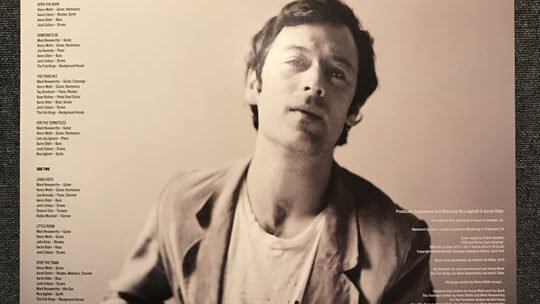
Critical reception to Linda Vista was warm and admiring. American Songwriter called it an album that ‘practically demands repeated listening,’ while Rolling Stone covered the record positively. The lead single ‘Someone Else’ became the most-noticed track, a quietly devastating meditation on self and transformation. The song was featured in the independent film Terri, directed by Azazel Jacobs and starring John C. Reilly — a placement that introduced Wolfe’s music to a broader audience. An early version of another track, ‘Stop the Train,’ appeared in the 2009 film Julie and Julia, providing an unexpected but fitting connection to his mother, who starred in that film. On March 2, 2011, Henry made his national television debut as a musical guest on Jimmy Kimmel Live!, performing ‘Someone Else’ and ‘Stop the Train’ to a primetime audience — a milestone for any independent artist.
Asilomar (2015): A Sophomore Album of Depth and Refinement
Henry’s second full-length album, Asilomar, arrived in July 2015 and confirmed the promise of its predecessor while expanding his sonic and lyrical range. Named after the historic conference grounds on California’s Monterey Peninsula, the album’s nine tracks — including ‘Crime,’ ‘The Afterlife,’ ‘Miracle Mile,’ ‘Surfer Girl,’ ‘While I’m Away,’ ‘Rose Parade,’ ‘Like Water,’ and the title track — reflect a California dreamscape filtered through a distinctly literary and melancholic sensibility. Produced and engineered by Thom Monahan in Los Angeles, the record was mastered by JJ Golden at Golden Mastering in Ventura, California. It was released on Henry’s own Undermountain label, reinforcing his commitment to complete creative and commercial independence throughout his career.
Critics and fans alike noted Asilomar’s expanded sonic palette. Drawing more overtly on the 1980s New Romantic tradition while retaining the folk-pop warmth of Linda Vista, the album positioned Henry as a versatile craftsman capable of working across multiple stylistic registers without losing coherence or emotional focus. His Bandcamp description captures the ambition neatly: his sound ‘fuses 60s pop and RnB, 70s singer-songwriter and 80s New Romantic into something strange, new and slippery.’ The album has been compared to artists as varied as Roxy Music, Talk Talk, Paul Simon, and Nina Simone — a remarkably diverse range of reference points that speaks to the breadth of his influences. Asilomar remains the most fully realized and widely appreciated work in his discography.
Henry Wolfe as an Actor: A Secondary but Significant Career
Alongside his music career, Henry has pursued an acting path with quiet consistency. His film appearances include the 2006 independent film Lying, directed by M Blash, and the 2011 film The Wait, also directed by Blash. He had a small role in the acclaimed Robert De Niro thriller The Good Shepherd (2006), and appeared in a short film titled Wolfe with an E, directed by David Louis Zuckerman. His connection to cinema extends through his music as well: songs from his solo catalog have been licensed for major motion pictures, placing his work alongside composers and artists of significantly higher commercial profiles. His appearance on the Ricki and the Flash (2015) soundtrack — directed by Jonathan Demme and starring Meryl Streep — marks one of the rare moments where his two family creative worlds briefly overlapped.
Henry’s acting career has never overshadowed his musical identity, but it reflects the multidisciplinary creative environment in which he was raised. Growing up with a mother whose command of character, emotion, and language is unparalleled, and sisters who have pursued careers in film and television, it would be strange if Henry had no interest in performance. His roles have been modest in scale but chosen with evident care — all independent, artistic projects rather than commercial vehicles. This selectivity speaks to a consistent artistic philosophy: quality of experience over scale of exposure. Whether writing songs, recording albums, performing live, or appearing on screen, Henry Wolfe operates according to a set of values that prizes authenticity, craftsmanship, and genuine creative investment above all else.
Musical Style and Influences: A 20th-Century Sound for the 21st Century
The Sonic Architecture of an Indie Auteur
Henry Wolfe’s musical identity is deeply rooted in the sounds of the 20th century. He has spoken extensively about the influence of Harry Nilsson, Randy Newman, Paul McCartney’s post-Beatles solo work, and the jazz standard tradition — artists and genres that prize melodic ingenuity, harmonic sophistication, and lyrical wit above all else. His self-described approach involves fusing 1960s pop and rhythm and blues, 1970s singer-songwriter introspection, and the atmospheric textures of 1980s New Romantic music into a sound that feels at once nostalgic and distinctly personal. The result is music that sits comfortably outside contemporary trends: it does not seek approval from streaming algorithms or playlist curators, but instead makes demands on the listener’s patience and attention.
One particularly illuminating detail about Henry’s creative process is his habit of teaching himself jazz standards on piano. He has explained that jazz chord changes are ‘often more complex and interesting, from a musical and compositional standpoint, than your average rock or folk song.’ This harmonic ambition filters directly into his own songwriting, where unexpected chord progressions and melodic turns keep even familiar lyrical themes feeling fresh and unresolved. His decision to record Linda Vista on analog tape rather than digital equipment was not mere nostalgia but a principled aesthetic choice: analog recording captures warmth, imperfection, and physical presence in ways that digital production often flattens. This sonic philosophy makes his work immediately distinguishable from much of what occupies contemporary indie playlists.
Critical Comparisons and Peer Recognition
The range of artists to whom Henry Wolfe has been compared says much about the breadth of his influences and the difficulty of categorizing his work neatly. Critics and music writers have cited Roxy Music’s glam sophistication, Talk Talk’s atmospheric depth, Paul Simon’s literary precision, and Nina Simone’s emotional directness as touchstones for understanding his sound. These are not casual comparisons — each points to a genuine strand of influence woven into the fabric of his music. His songs have been described as possessing a cinematic quality, a capacity to create specific emotional and geographic atmospheres through lyric and melody alone. This is the hallmark of a mature songwriter operating at a high level of craft, and it helps explain why his music has found a home in independent cinema and why critics with demanding standards have responded warmly to his work.
Personal Life: Marriage, Family, and Life in Los Angeles
Henry Wolfe married Tamryn Storm Hawker in June 2019, and the couple has built a family together in Los Angeles. They are the parents of a daughter and a son, who was born in May 2022. Henry has maintained a deliberately private personal life, keeping details of his family out of the public sphere with the same intentionality that has characterized his entire career. Living and working in Los Angeles — the city that shaped his musical development after the dissolution of Bravo Silva — he continues to record and perform, reportedly working on a third solo album. His Bandcamp page describes him as an artist ‘drawing on memories of the 20th century,’ a phrase that functions both as aesthetic manifesto and personal philosophy: to make music that is grounded in the best of what has come before while remaining entirely his own.
The relationship between Henry Wolfe and his mother’s fame is one of the more interesting dynamics in contemporary American celebrity culture. He has navigated it with remarkable grace and intelligence: not denying it, not exploiting it, but consistently redirecting attention toward the work itself. He took a middle name as his stage name precisely to establish that separation. His music carries no markers of privilege or entitlement — it is earnest, carefully crafted, and emotionally honest work that would merit attention regardless of his family tree. The fact that Meryl Streep is his mother has occasionally opened doors — his ‘Stop the Train’ appeared in Julie and Julia before his debut album was even released — but the sustained critical and audience attention his music has received is a testament to the quality of the songs themselves, not to the Streep name.
Complete Discography: Albums, EPs, and Singles
Henry Wolfe’s recorded output, while not vast in volume, is consistently high in quality. His discography reflects deliberate pacing and careful curation rather than commercial urgency. It includes:
Bravo Silva – July (EP, 2004): His first recording with the New York indie pop band he co-founded after leaving NYU.
Bravo Silva – Bravo Silva (Album, 2005): The band’s self-titled full-length debut, which earned positive critical notices before the group disbanded.
The Blue House (EP, 2008): His first solo EP, featuring original folk-pop compositions that introduced his post-band artistic direction.
Wolfe Sings Field (EP, 2009): A collection of covers interpreting songs by Portland writer Peter Field, demonstrating his interpretive range.
Linda Vista (Album, 2011): His critically acclaimed debut full-length, recorded on analog tape, featuring ‘Someone Else’ and ‘Stop the Train.’
Encino (EP, 2014): A four-track release with new wave-tinged indie rock elements and Los Angeles-inspired imagery.
Asilomar (Album, 2015): His most fully realized work, featuring nine tracks including ‘Crime,’ ‘Miracle Mile,’ and the title track.
Black Thumb (Single, 2019): A fan-favorite standalone release that showcased his evolving solo sound.
On a Corner (Single, 2020): Part of a productive period of single releases reflecting continued artistic activity.
No Time (Single, 2020): A contemplative track showcasing his fusion of indie pop and introspective lyricism.
Television Appearances and Film Sync Placements
One of the quieter but most significant aspects of Henry Wolfe’s career is the consistent placement of his music in film and television. ‘Someone Else’ was featured in the 2011 independent film Terri, directed by Azazel Jacobs — the same director who helmed the music video for the song, which starred actress Brit Marling. An early version of ‘Stop the Train’ appeared in the Nora Ephron-directed film Julie and Julia. His contribution to the Ricki and the Flash soundtrack in 2015 — a film directed by the legendary Jonathan Demme — demonstrated the critical regard in which his musicianship is held by serious filmmakers. These sync placements are not the work of a music supervisor chasing recognizable names; they reflect genuine artistic alignment between Wolfe’s music and the emotional demands of distinguished cinematic storytelling.
Henry’s March 2011 appearance on Jimmy Kimmel Live! remains his most prominent national television moment. Performing ‘Someone Else’ and ‘Stop the Train’ from Linda Vista on primetime network television, he reached an audience far beyond his existing fanbase and demonstrated the quiet power of his live performance. He also gave an in-studio performance for WNYC’s Soundcheck with host John Schaefer in May 2011 — a program known for its rigorous and discerning approach to music. His performance at South by Southwest in Austin, Texas, placed him on the same stages as international touring acts, introducing his sound to the kind of industry audience that shapes critical and commercial trajectories. These appearances, modest in number but significant in context, reflect a career built on quality over quantity.
Henry Wolfe’s Legacy: An Independent Voice in Modern American Music
Henry Wolfe occupies a unique and somewhat paradoxical position in American cultural life. As the son of Meryl Streep, he has access to cultural capital that most independent musicians can only dream of. Yet his career has been characterized by a sustained refusal to trade on that capital, a commitment to building an audience through music alone. His Undermountain Music label, his analog recording philosophy, his eclectic influences, and his slow and deliberate discography all point to an artist whose priorities are artistic rather than commercial. In an era when streaming metrics and social media presence define success, Henry Wolfe represents an alternative model: the quiet craftsman, working at his own pace, making music that demands attention and rewards patience.
Looking forward, Henry is reportedly at work on a third solo album — a project that, if his previous creative timeline is any guide, will arrive when it is ready rather than when the market dictates. His existing catalog continues to find new listeners through streaming platforms, and his Bandcamp page remains an active and direct point of connection with his audience. His story — of growing up famous adjacent, choosing integrity over exposure, and building a body of work that speaks for itself — is increasingly rare in contemporary music. Whether or not his third album arrives to wider commercial recognition, Henry Wolfe’s legacy as a sincere, skilled, and independent American songwriter is already secure.
Conclusion
Henry Wolfe is an artist who has consistently chosen depth over breadth, craft over celebrity, and integrity over convenience. From his days co-founding Bravo Silva in New York City to recording Linda Vista on analog tape in Los Angeles, from his film sync placements to his network television debut, every step of his career has been marked by the same quiet seriousness of purpose. He grew up in the long shadow of one of cinema’s greatest icons, and rather than sheltering in that shadow or fleeing from it, he simply walked in a different direction — toward a guitar, a piano, and the infinite creative possibilities of the American songwriter tradition. In doing so, he has not just made good music; he has made music that is genuinely, unmistakably his own.
Frequently Asked Questions (FAQs)
Who is Henry Wolfe?
Henry Wolfe (full name Henry Wolfe Gummer) is an American indie pop singer-songwriter, musician, and actor born on November 13, 1979, in New York City. He is the eldest son of actress Meryl Streep and sculptor Don Gummer.
Why does he go by Henry Wolfe and not Gummer?
Henry uses ‘Wolfe,’ his middle name, as his professional stage name to establish an artistic identity separate from his famous mother. He has said the choice was about being evaluated on the merit of his music, not his family connections.
What are Henry Wolfe’s most famous songs?
His best-known songs include ‘Someone Else’ and ‘Stop the Train’ from his debut album Linda Vista (2011), both of which received significant exposure through film placements and his appearance on Jimmy Kimmel Live!.
Is Henry Wolfe married?
Yes. Henry Wolfe married Tamryn Storm Hawker in June 2019. They have two children together — a daughter and a son born in May 2022 — and live in Los Angeles, California.
What albums has Henry Wolfe released?
His main solo albums are Linda Vista (2011) and Asilomar (2015), both released on his own Undermountain Music label. He has also released several EPs including The Blue House (2008), Wolfe Sings Field (2009), and Encino (2014), plus standalone singles including ‘Black Thumb’ and ‘No Time’ (both 2019–2020).
Has Henry Wolfe appeared in any films?
Yes. He has acted in several independent films including Lying (2006), The Good Shepherd (2006), and The Wait (2011). His music has also been featured in films such as Terri (2011), Julie and Julia (2009), and on the Ricki and the Flash (2015) soundtrack.
What is Henry Wolfe’s musical style?
Henry’s sound draws on 1960s pop and R&B, 1970s singer-songwriter traditions, and 1980s New Romantic influences. He has been compared to Roxy Music, Talk Talk, Paul Simon, and Nina Simone. His music is notable for its analog warmth, literary lyrics, and harmonic sophistication.
