
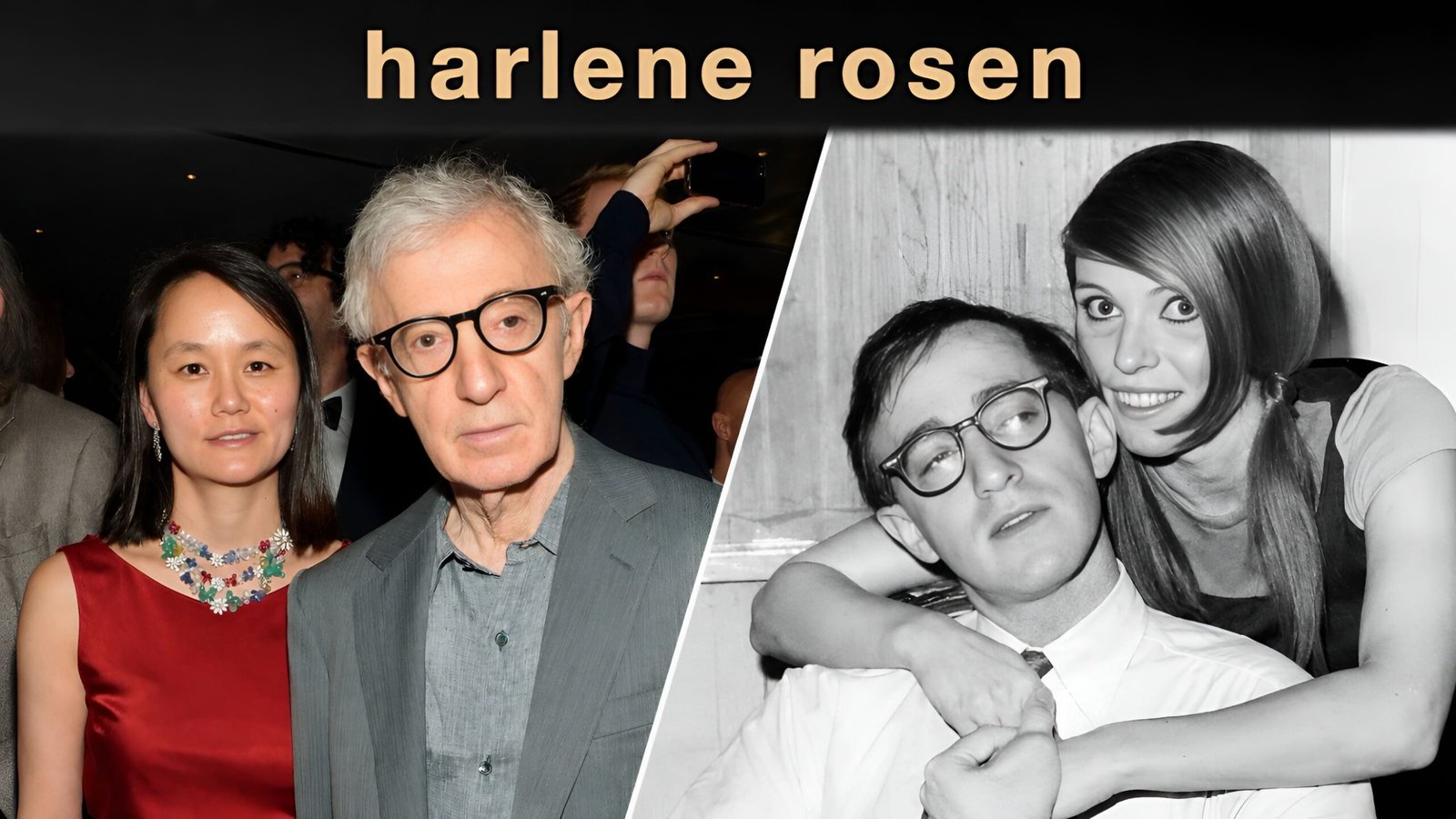
Harlene Rosen is best known as the first wife of filmmaker and comedian Woody Allen. Born in Brooklyn, New York, around 1939 or 1940, she married Allen in 1956 when she was still a teenager. Their six-year marriage later became publicly discussed because Allen referenced their relationship in his early comedy routines. After their divorce in 1962, Rosen pursued legal action over comments made publicly about her and then chose to live a quiet, private life away from media attention.
Quick Bio Table
| Detail | Information |
| Full Name | Harlene Susan Rosen |
| Birth Year | 1939–1940 |
| Birthplace | Brooklyn, New York, USA |
| Nationality | American |
| Known For | First wife of Woody Allen |
| Profession/Interest | Pianist |
| Marriage Date | March 15, 1956 |
| Divorce Finalized | November 1962 |
| Children | None |
| Legal Action | Filed a defamation lawsuit against Woody Allen and NBC |
| Current Status | Lives privately away from public attention |
Who Is Harlene Rosen?
Harlene Susan Rosen is an American woman whose name became publicly associated with filmmaker and comedian Woody Allen during the earliest stage of his career. Although her public recognition largely came through that relationship, Rosen’s personal story extends beyond celebrity association and reflects the experience of someone who unexpectedly became connected to public entertainment culture during the 1950s and early 1960s. Born in Brooklyn, New York, around 1939 or 1940, she grew up during a period when family life, education, and artistic interests shaped many middle-class households in postwar America. Public information about her childhood remains limited because Rosen consistently maintained personal privacy throughout most of her adult life, even during periods when media attention surrounding her former husband increased dramatically over the decades.
From an early age, Rosen developed a serious interest in music, particularly piano performance, which later became an important part of her relationship with Allen during his early creative years. While many biographies focus primarily on her marriage, Rosen’s musical ability and artistic background played a genuine role in the social circles they shared before Allen became internationally famous. Friends and biographical accounts from the era often describe her as intelligent, creative, and reserved, qualities that contrasted sharply with the increasingly public and performance-driven lifestyle that eventually surrounded Allen’s growing comedy career. Her story remains significant not because she sought celebrity attention herself, but because her experience reflects broader conversations about privacy, public identity, and the personal cost of entertainment culture during a rapidly changing period in American media history.
Early Life and Family Background
Harlene Rosen spent her early years in Brooklyn, New York, an environment that strongly influenced many young Jewish families during the 1940s and 1950s. Brooklyn at the time was culturally vibrant and socially close-knit, filled with neighborhoods where education, music, religion, and community relationships often played central roles in family life. Although detailed records about Rosen’s parents and siblings are not publicly available, various biographical references suggest she was raised in a stable household that valued personal discipline and artistic development. Unlike many later public figures connected to Hollywood culture, Rosen did not emerge from an entertainment industry background. Her upbringing appears to have been relatively traditional, shaped more by local community values than by ambitions related to fame or celebrity life.
Music became one of the defining aspects of Rosen’s youth, especially her dedication to piano performance. During that era, musical training was widely encouraged in many American households because it represented refinement, education, and cultural accomplishment. Rosen reportedly developed enough skill as a pianist to participate confidently in local artistic settings and social gatherings involving music. This artistic ability later helped connect her with Allen, who maintained a deep personal interest in jazz throughout his life. Even before Allen achieved professional success as a comedian and filmmaker, jazz music formed an important part of his identity, and Rosen’s musical talent naturally complemented that environment. Her early life therefore established the foundation for a relationship rooted not only in youthful romance, but also in shared artistic interests that initially brought both individuals together.
How Harlene Rosen Met Woody Allen
Harlene Rosen met Allan Stewart Konigsberg, later known professionally as Woody Allen, during the mid-1950s in New York City while both were still extremely young. Allen was attempting to establish himself as a comedy writer and performer during a period when television and nightclub entertainment were expanding rapidly across the United States. Their relationship reportedly developed through overlapping artistic and social circles connected to music and performance culture in New York. Allen’s lifelong interest in jazz and Rosen’s talent as a pianist created an immediate common ground between them. According to several biographical accounts, Rosen even participated musically in Allen’s early jazz activities, reflecting a partnership initially built around shared creative enthusiasm rather than fame or professional ambition.
Their courtship progressed quickly, which was not uncommon during the social climate of the 1950s when young marriages were more socially accepted than they are today. Rosen was still in her mid-teenage years when the relationship became serious, while Allen himself was only beginning adulthood and struggling to establish career stability. Friends and acquaintances from that era often described their connection as emotionally intense, youthful, and deeply shaped by artistic aspiration. At that stage, Allen had not yet developed the internationally recognized persona that later defined his public identity. Instead, he was an ambitious young comedy writer searching for opportunities in entertainment. Rosen therefore entered the relationship before celebrity status existed, during a period when both individuals were still navigating education, adulthood, and uncertain professional futures in New York’s highly competitive creative environment.
Marriage and Life Together in New York
On March 15, 1956, Harlene Rosen and Woody Allen married in a relatively private ceremony attended primarily by family members and close acquaintances. Rosen was only 17 years old at the time, while Allen was 20. Their marriage reflected the cultural norms of mid-century America, when young couples often entered adulthood quickly through marriage despite limited financial security or professional stability. After the wedding, the couple settled into married life in New York City while Allen continued pursuing opportunities in comedy writing, nightclub performance, and television entertainment. During these early years, financial limitations reportedly created stress within the relationship because Allen’s income remained inconsistent while he attempted to build a long-term entertainment career in a highly competitive industry.
Despite these pressures, the early stage of their marriage also included periods of genuine companionship and shared artistic interest. Rosen supported Allen’s creative ambitions during a formative stage of his professional life, while continuing her own involvement with music and education. Their relationship existed long before Allen became an internationally recognized filmmaker, meaning Rosen experienced the uncertainty, instability, and emotional pressures that often accompany the earliest years of artistic careers. However, several later interviews and biographical discussions suggest the marriage began experiencing difficulties relatively early. Differences in maturity, personal goals, emotional communication, and expectations for adult life gradually created distance between them. What began as a youthful relationship grounded in creativity increasingly struggled against the pressures of public performance, financial instability, and Allen’s growing focus on career advancement.
Why Their Marriage Began to Deteriorate
The marriage between Harlene Rosen and Woody Allen gradually deteriorated because of emotional incompatibility, differing personal priorities, and the increasing demands of Allen’s emerging entertainment career. Various interviews and biographies published later in Allen’s life indicate that he himself acknowledged emotional immaturity during the early years of the marriage. Rosen reportedly preferred stability, privacy, and a quieter personal environment, while Allen’s professional ambitions required constant public engagement, long work hours, and increasingly intense involvement in comedy performance and television writing. These differences became more significant as Allen’s career opportunities expanded and his identity became increasingly connected to public entertainment culture rather than domestic life.
Financial pressure also contributed heavily to the strain within the relationship during the late 1950s. In the early period of their marriage, Allen earned very little income while attempting to establish himself professionally. Although his financial circumstances improved later through television writing and comedy work, emotional tensions within the marriage reportedly continued growing rather than improving. Several accounts suggest the couple discussed separation long before the divorce was finalized, but legal restrictions surrounding divorce in New York during that era made the process more difficult than it would later become. By the early 1960s, the emotional distance between them had become increasingly public through Allen’s comedy routines and interviews. What had once been a private relationship between two young people slowly evolved into a subject discussed publicly within entertainment spaces, creating additional emotional pressure on Rosen herself.
Public Jokes and Growing Controversy
As Woody Allen developed his stand-up comedy persona during the early 1960s, aspects of his personal life increasingly became material for his performances. Several nightclub routines and television appearances included references to his marriage and domestic experiences with Harlene Rosen. In some performances, Allen referred to her using phrases such as “the Dread Mrs. Allen,” a recurring comedic expression that later became widely associated with discussions about their marriage. Some biographical accounts also describe additional jokes and public comments that Rosen reportedly found humiliating and emotionally damaging. However, details surrounding certain specific remarks have varied across sources over time, and not every anecdote commonly repeated online has been fully verified through primary archival documentation.
The broader issue was not simply the existence of marital humor, which had long been common in stand-up comedy, but the increasingly personal nature of the public commentary surrounding Rosen herself. Unlike Allen, Rosen was not a performer or public figure seeking media attention, and she reportedly struggled with the sudden transformation of private marital problems into entertainment material consumed by audiences. The situation reflected a larger cultural shift occurring within comedy during the 1960s, when performers increasingly blurred boundaries between personal life and public storytelling. Rosen’s discomfort with these public portrayals later became central to discussions about dignity, privacy, and the ethical responsibilities entertainers may have toward real individuals referenced in their material. The controversy surrounding those performances ultimately contributed significantly to the permanent breakdown of the relationship.
Divorce and Legal Dispute
Harlene Rosen and Woody Allen officially divorced in November 1962 after approximately six years of marriage. Reports from the period indicate that the legal settlement included weekly spousal support payments from Allen to Rosen, reflecting the financial arrangements commonly ordered in divorce cases during that era. By the time the divorce became final, Allen’s entertainment career had begun improving substantially through television writing and stand-up performance opportunities. Although the marriage legally ended, public discussion surrounding their relationship continued because Allen still referenced aspects of it during comedy appearances and interviews. This ongoing public attention reportedly caused additional distress for Rosen, who consistently preferred maintaining privacy rather than participating in media debates surrounding the relationship.
The situation eventually escalated into legal action when Rosen filed a defamation lawsuit against Allen and NBC. The lawsuit attracted attention because it touched on broader questions involving entertainment, comedy, and the rights of private individuals discussed publicly by performers. Rosen argued that the repeated public jokes and descriptions about her caused reputational and emotional harm. While the case itself did not become a major landmark legal precedent, it represented an unusually visible conflict during a period when comedians rarely faced serious public scrutiny over personal material involving former spouses or private individuals. The legal dispute also reflected changing attitudes toward privacy and media responsibility during the early television era. Even decades later, the case remains part of broader cultural discussions about the ethical limits of autobiographical comedy and public storytelling.
Choosing a Life Away From Public Attention
After the divorce and legal dispute concluded, Harlene Rosen made a deliberate decision to withdraw almost entirely from public attention. Unlike many individuals connected to famous entertainers, she did not attempt to build a media identity around the relationship or capitalize financially on her connection to Woody Allen. She avoided interviews, rarely appeared in public discussions about Allen’s career, and maintained an extremely private lifestyle for decades afterward. This choice significantly limited the amount of publicly available information about her later life, which explains why many modern biographies rely heavily on historical references from the late 1950s and early 1960s rather than recent public commentary from Rosen herself.
Her decision to maintain privacy has often been interpreted as a reflection of personal restraint and emotional resilience rather than withdrawal from society altogether. Rosen appeared to value personal boundaries and normalcy at a time when media interest surrounding Allen continued expanding internationally through film success and celebrity culture. Over time, her silence also contributed to a more balanced public understanding of the relationship because she avoided sensational public disputes or prolonged media conflict. In an era increasingly shaped by celebrity interviews, memoirs, and public controversy, Rosen’s refusal to transform private experiences into ongoing publicity became notable in itself. Her life after divorce therefore reflects not only personal independence, but also a conscious rejection of the entertainment industry culture that had previously caused her emotional difficulty.
Harlene Rosen’s Message Decades Later
One of the most discussed developments in later years came in 2015 when biographer David Evanier published material connected to a biography of Woody Allen. Rosen reportedly provided a personal statement reflecting on her early relationship with Allen and the passage of time since their marriage ended. Rather than expressing hostility or bitterness, her comments were widely interpreted as thoughtful, reflective, and emotionally measured. She referred warmly to aspects of their youthful relationship and acknowledged the immaturity and uncertainty both individuals experienced during that stage of life. The statement surprised many readers because it contrasted sharply with the conflict and legal disputes associated with the earlier years of their relationship.
Her remarks did not erase the documented difficulties of the marriage, nor did they attempt to rewrite the emotional challenges that had occurred publicly during the 1960s. Instead, the statement reflected the perspective of someone looking back on youthful experiences with emotional distance and maturity gained through decades of private life. Rosen’s comments also reinforced the idea that personal relationships often become more complicated when examined through the lens of public memory and celebrity history. By addressing the past without sensationalism, she presented herself as someone interested more in personal peace than in revisiting public controversy. The statement therefore became important not because it reignited media conflict, but because it demonstrated composure, perspective, and an ability to separate youthful mistakes from lifelong bitterness many decades later.
Woody Allen’s Rise to Fame
While Harlene Rosen chose privacy after the divorce, Woody Allen continued building a career that eventually transformed him into one of the most recognizable filmmakers in modern American cinema. Born Allan Stewart Konigsberg in Brooklyn, New York, Allen initially achieved success through television joke writing and stand-up comedy during the late 1950s and early 1960s. His comedy persona centered heavily on anxiety, relationships, insecurity, intellectual humor, and personal neuroses, themes that later became central to his films as well. Over time, he expanded from stand-up comedy into screenwriting, acting, directing, and filmmaking, developing a distinctive cinematic style associated closely with New York City culture and introspective storytelling.
Allen’s breakthrough film success eventually came through works such as Annie Hall, which won multiple Academy Awards and established him internationally as a major creative figure. Many critics and historians later observed that Allen’s early comedy material often drew heavily from personal experiences and relationships, including themes connected to marriage, emotional insecurity, and romantic failure. Although Rosen herself largely avoided discussing those connections publicly, biographical analysis frequently identifies the emotional dynamics of Allen’s early relationships as important influences on his creative development. Understanding Rosen’s role during this formative stage therefore provides additional historical context for Allen’s artistic evolution. Their relationship existed before fame, awards, and international recognition, during the uncertain period when Allen’s public identity and creative voice were still developing within New York entertainment culture.
The Cultural Significance of Harlene Rosen’s Story
The story of Harlene Rosen continues attracting interest because it reflects larger cultural conversations extending far beyond celebrity biography alone. Her experience raises important questions about privacy, artistic freedom, gender dynamics, and the emotional impact of public storytelling on individuals who never intended to become public figures themselves. During the early years of television comedy, performers increasingly transformed personal experiences into entertainment material, often without considering how those portrayals affected real people connected to them. Rosen’s experience became one of the earliest highly visible examples of tension between comedic expression and personal dignity. Decades later, those same debates continue surrounding stand-up comedy, autobiographical storytelling, podcasts, and social media entertainment.
Her story also illustrates how public memory often focuses disproportionately on famous individuals while overlooking the experiences of people connected to them. Rosen did not build a career through controversy, interviews, or celebrity culture. Instead, she maintained personal discretion despite prolonged public curiosity surrounding her former marriage. In many ways, this restraint contributed to the lasting respect many observers express toward her today. Modern audiences increasingly recognize that privacy itself can represent a meaningful personal choice, especially within media environments driven by constant exposure and public commentary. Rosen’s legacy therefore extends beyond her marriage to Allen. It reflects broader themes involving emotional resilience, personal boundaries, and the challenge of maintaining individual identity while connected to someone whose public influence eventually reached international scale.
Sources and Historical Context
Public information about Harlene Rosen remains relatively limited because she consistently chose a private life after the early 1960s. Most historical details connected to her marriage with Woody Allen come from biographies, archived entertainment reporting, interviews, legal references, and commentary published over several decades. Some accounts describing specific jokes, conversations, or emotional incidents vary slightly between sources because many events were reconstructed later through retrospective interviews rather than contemporaneous documentation. As a result, responsible biographies typically distinguish clearly between verified public records and anecdotal claims repeated through secondary reporting over time.
Biographical references connected to Rosen often appear within broader studies of Allen’s career and early life rather than through direct interviews with Rosen herself. Works connected to biographer David Evanier and archived entertainment journalism provide some of the most commonly cited discussions about the relationship. However, because Rosen rarely participated publicly in media narratives surrounding Allen, many aspects of her later life remain intentionally private and undocumented. This absence of public detail should not be interpreted as historical insignificance. Instead, it reflects a consistent personal decision to remain outside celebrity culture despite decades of public curiosity. Any responsible discussion of Rosen’s life therefore benefits from careful attention to verified information, historical context, and respect for the personal privacy she has maintained throughout adulthood.
Conclusion
Harlene Rosen’s story remains historically significant not because she pursued fame, but because her life became unexpectedly connected to one of the most influential figures in American entertainment history. Her marriage to Woody Allen occurred long before international recognition, major film awards, or cultural controversy surrounded his career. She experienced the uncertainty, financial instability, and emotional pressures that shaped Allen’s earliest years in comedy and entertainment. At the same time, her experience illustrates how rapidly private relationships can become public material once fame enters the picture. The emotional consequences of that transition became central to the legal dispute and public discussions that followed their divorce during the early 1960s.
What ultimately distinguishes Rosen’s legacy is the consistent dignity and restraint she maintained afterward. Rather than remaining permanently attached to celebrity controversy, she chose independence, privacy, and personal distance from the entertainment world that had once brought her unwanted attention. Her later reflections showed emotional maturity without attempting to erase the genuine difficulties that existed earlier in life. Today, her story continues resonating because it combines themes of youth, ambition, artistic culture, public identity, and personal resilience within a broader historical context. Harlene Rosen may always be remembered partly through her connection to Woody Allen, but her enduring significance comes equally from the quiet and composed way she navigated a deeply public chapter of her life.
Frequently Asked Questions (FAQs)
1. Who is Harlene Rosen?
Harlene Rosen is an American woman best known as the first wife of filmmaker and comedian Woody Allen. She married Allen in 1956 while both were still very young and later became associated with public discussions surrounding his early comedy career and their eventual divorce.
2. When did Harlene Rosen marry Woody Allen?
Harlene Rosen married Woody Allen on March 15, 1956, in New York City. She was 17 years old at the time, while Allen was 20 and still establishing himself professionally within the entertainment industry.
3. Why did Harlene Rosen and Woody Allen divorce?
Their marriage reportedly ended because of emotional incompatibility, differing personal priorities, and tensions connected to Allen’s growing comedy career. Public references to their marriage within Allen’s comedy routines also contributed significantly to strain within the relationship.
4. Did Harlene Rosen file a lawsuit against Woody Allen?
Yes. Rosen filed a defamation lawsuit against Woody Allen and NBC after objecting to public jokes and comments made about her during comedy performances and television appearances.
5. Did Harlene Rosen and Woody Allen have children?
No. Harlene Rosen and Woody Allen did not have children during their six-year marriage.
6. What was Harlene Rosen’s profession or talent?
Rosen was known for her musical ability as a pianist. Music reportedly played an important role during her relationship with Allen because both shared a strong appreciation for jazz and artistic culture.
7. Is Harlene Rosen still alive?
As of 2026, there are no confirmed public reports indicating Harlene Rosen’s death. Because she has maintained an extremely private lifestyle for decades, little verified information about her current personal circumstances is publicly available.
